We're accepting applications for our 2026 cohort -- see https://ecoevoreu.ucdavis.edu/apply for more information. Application review begins on 15 February 2026.
And we have updates on our alumni!
2022 Cohort
Aadia Moseley-McCloud finished her MS last April and now is a PhD student in the Classen lab at the University of Michigan. Continuing in the circle of life, she's mentoring undergraduates and encouraging them to apply to REU programs.
The EEWL REU is in the midst of our summer program.
Everyone is hard at work in their labs, with some developing an unforeseen fondness for their study organism ("Corn is growing on me...."). In addition to research, scholars are taking part in a science communication workshop and learning R scripting.
It's a lovely rainy day in Davis -- coming on the heels of the cool, sunny, and clear one that followed Tuesday's atmospheric river. The local tree frogs are starting to perk up as the days lengthen.
So...we've been kinda busy since, ummmmm..... January 2024, and put newsy updates on the back burner, where they promptly fell into the crack between the stove and the wall. Here's a rundown of what's happened in our world in the past 10 months.
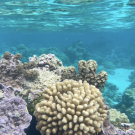
UC Davis Chancellor Gary May interviewed Rachael Bay as part of his series, Face to Face. Chancellor May learned about corals, climate change, getting undergrads into research in genomics, and a bit of what it's like to be one of Popular Science magazine's "Brilliant 10."
We're thrilled to announce that the 2023 cohort of Sloan Research Fellows includes Professor Kate Laskowski. The Sloan Research Fellowship, a prestigious award given by the Alfred P. Sloan Foundation, recognizes early-career scientific researchers seen as emerging leaders in their fields.
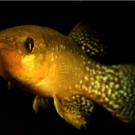
UC Davis environmental toxicologist Andrew Whitehead recently was interviewed by The Conversation Weekly. The podcast described three case studies, including Andrew's work, that demonstrate how humans can drive rapid evolution in natural systems. Andrew's research documents populations of killifish that thrive in polluted estuaries. But rather than a source of optimism, Andrew describes this as a "cautionary tale."
Bumble bees are some of the world’s most important pollinators, yet many bumble bee species are in decline. Our understanding of how landscape changes affect bumble bees is often limited to studies of where they forage on flowers. Through this project, REU students will test how bumble bees use landscapes throughout their life cycles. Students will compare the behavior and abundance of bumble bees across habitat types. We hypothesize that bees use different habitat types for nesting vs.