Latest News

Latest News

Phenology of plants under changing thermal regimes

Around the world, climate change has caused differences in mean temperature and precipitation, but also variation in the scale and timing of climatic events. The timing of weather events, such as germination-triggering rains, the melting of snowpack, and freeze or thaw cycles often have major effects on organisms that must synchronize birth, growth, and reproduction with favorable conditions. The timing of these events -- phenology -- in turn affects how individuals interact with their abiotic and biotic environment.


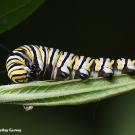
Thermal stress on monarch butterfly caterpillars

Ongoing climate change will continue to increase the frequency and intensity of extreme climate events, such as heat waves and droughts, with potentially wide-ranging consequences for species interactions. Temperature and moisture availability strongly affect the development of both monarch butterflies and their milkweed host plants, but the role of extreme climate events is less well characterized.

Two plausible hypotheses in the monarch-milkweed system center on heat waves:

Physiological stress in changing thermal and oxygen regimes

Balancing energy demand with energy supply is a critical component of being physiologically robust to changes in environmental conditions; however, the inability to maintain this energy balance may limit the capacity of fishes to acclimate to multiple co-occurring stressors associated with climate change. If species cannot metabolically reorganize to reestablish homeostasis following exposure to stressors, the energy demand required to cope with shifts in environmental conditions may outpace energy supply.

Range limits in changing oceans

What defines the limits to a species’ geographic range?

Fundamentally, a population fails to expand when it cannot achieve a positive growth rate beyond its current limits. The conditions under which this occurs can embody virtually all components of a species’ biology, making range limits an ideal testing ground for studies of the ecological and evolutionary impacts of nearly every imaginable form of rapid environmental change.

UC Davis Land Acknowledgement

We should take a moment to acknowledge the land on which we are gathered. For thousands of years, this land has been the home of Patwin people. Today, there are three federally recognized Patwin tribes: Cachil DeHe Band of Wintun Indians of the Colusa Indian Community, Kletsel Dehe Wintun Nation, and Yocha Dehe Wintun Nation.

Announcing the EERREC REU at UC Davis

Coming soon: the NSF REU site, Ecological and Evolutionary Responses to Rapid Environmental Change, will bring eight undergraduate researchers to UC Davis for summer research, mentoring, and professional development. The EERREC REU focuses on two major research themes: